
Comprehensive Steel Casting Services Tailored to Your Needs
Eagle Alloy offers high-quality steel casting services in our full-service foundry. From detailed prototyping to large-scale production runs, we deliver dependable carbon and stainless steel castings tailored to your specifications.
Steel Casting Services That Deliver Accuracy and Strength
We specialize in casting carbon steels, stainless steels, and select nickel-based alloys. Every part begins with your engineering needs, dimensional tolerances, volume requirements, and functional expectations. The result is a thoroughly tested, ready-to-use component that meets your specifications.
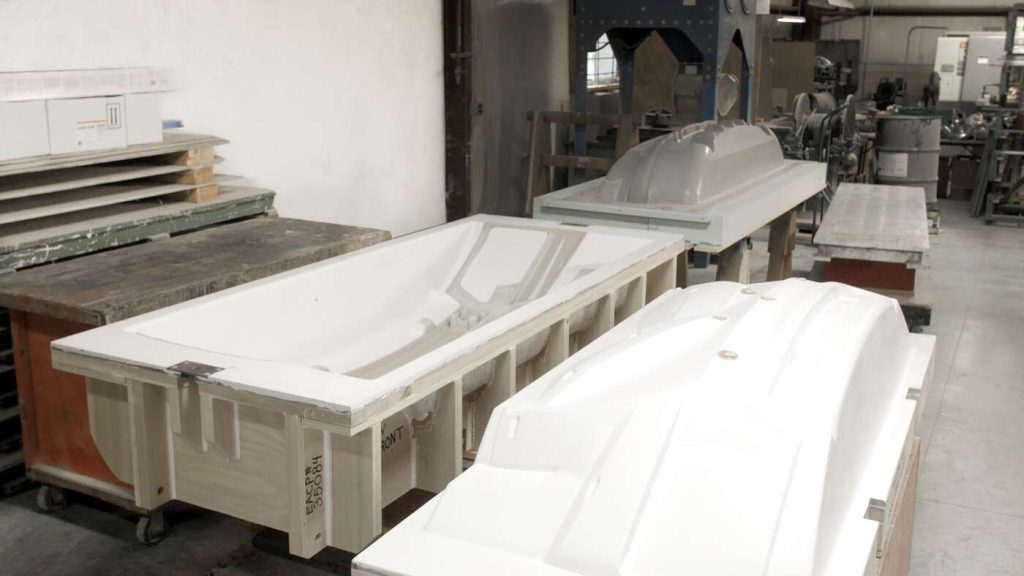
Shell Molding
Shell molding is a high-precision sand casting process ideal for medium to high volumes. It produces castings with excellent dimensional accuracy and surface finish—often requiring less post-processing than other sand methods.
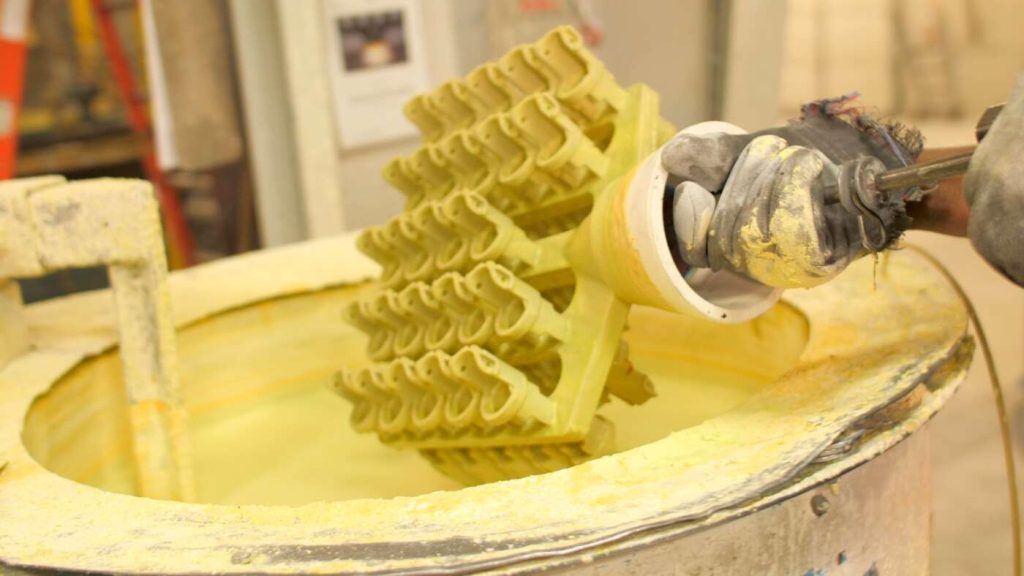
Airset Casting
Airset or no-bake casting is best for larger, lower-volume parts and complex cores. It offers design flexibility with less tooling cost than high-volume processes, making it ideal for industrial components and prototypes.
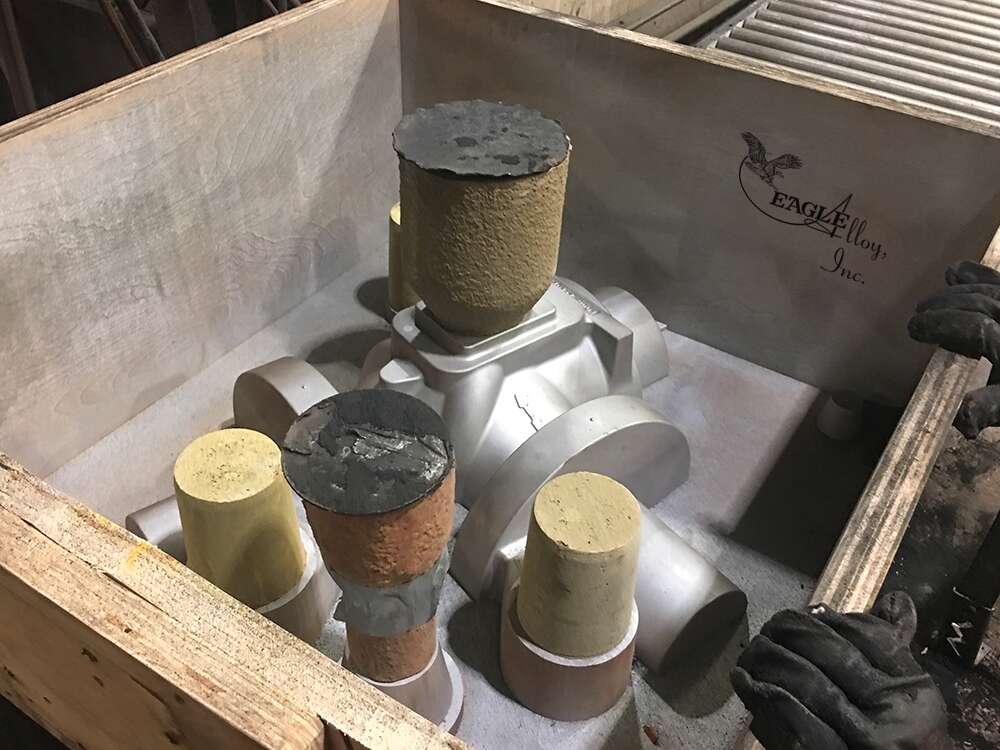
Rapid Prototyping
For rapid prototyping and short runs, 3D printed molds eliminate the need for hard tooling. This method offers design freedom and faster turnaround times for complex or evolving part geometries.
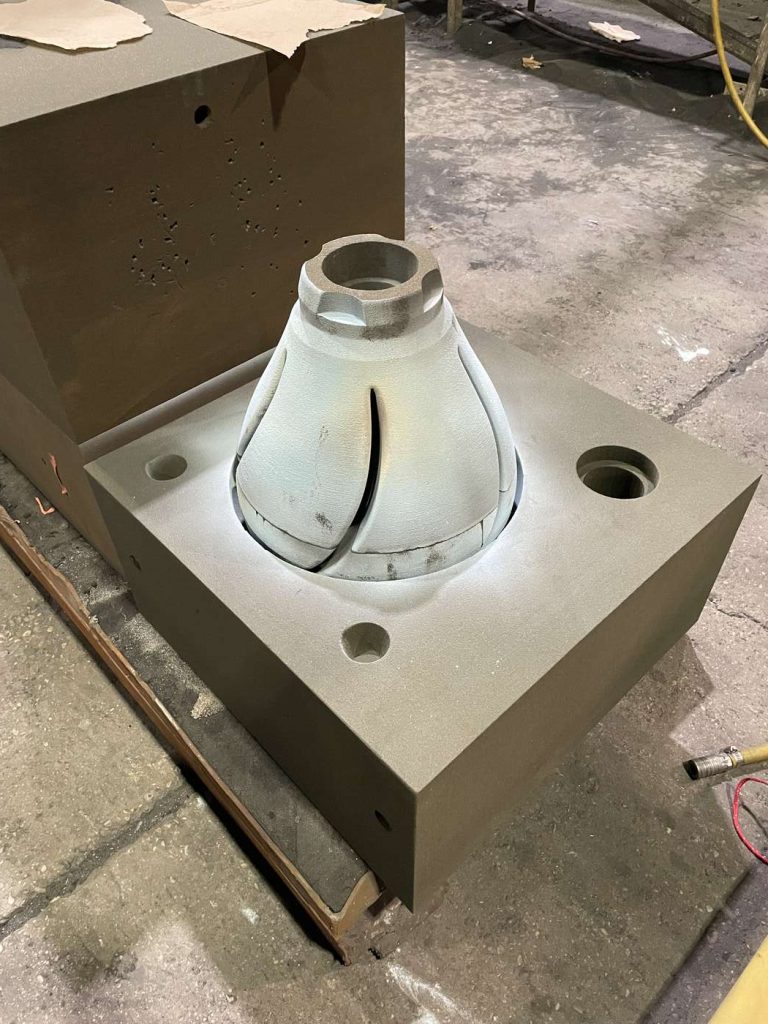
Dimensional Tolerances
Understand our tolerance guidelines for shell and airset castings, including angular tolerances, minimum wall thickness, and recommended machine stock.
Why Choose Eagle Alloy?
Extensive Alloy Options
We cast a wide range of materials, including carbon steel, stainless steel, and nickel alloys, to ensure the right combination of strength, corrosion resistance, and performance for your application.
Design for Manufacturability (DFM) and Value Engineering
We optimize casting performance and cost from the start. Our engineers evaluate geometry, gating, and steel flow using CAD and simulation tools to streamline production without compromising part function.
Integrated Sales and Production Control
Our sales team collaborates closely with operations to ensure project alignment and transparency. This structure enables us to achieve some of the fastest lead times in the industry, and our first customer, who joined us in 1979, remains with us to this day.
Advanced Equipment
- Multiple 5,000 lb. coreless induction furnaces
- In-house [3D simulation](insert link to MAGMA content if applicable) using MAGMASOFT
- CAD tools, including Solid Edge and Fusion 360
- Shell and airset mold and core machines
- Multiple robotic grinding cells
- In-house heat treatment department
Metrology and Inspection
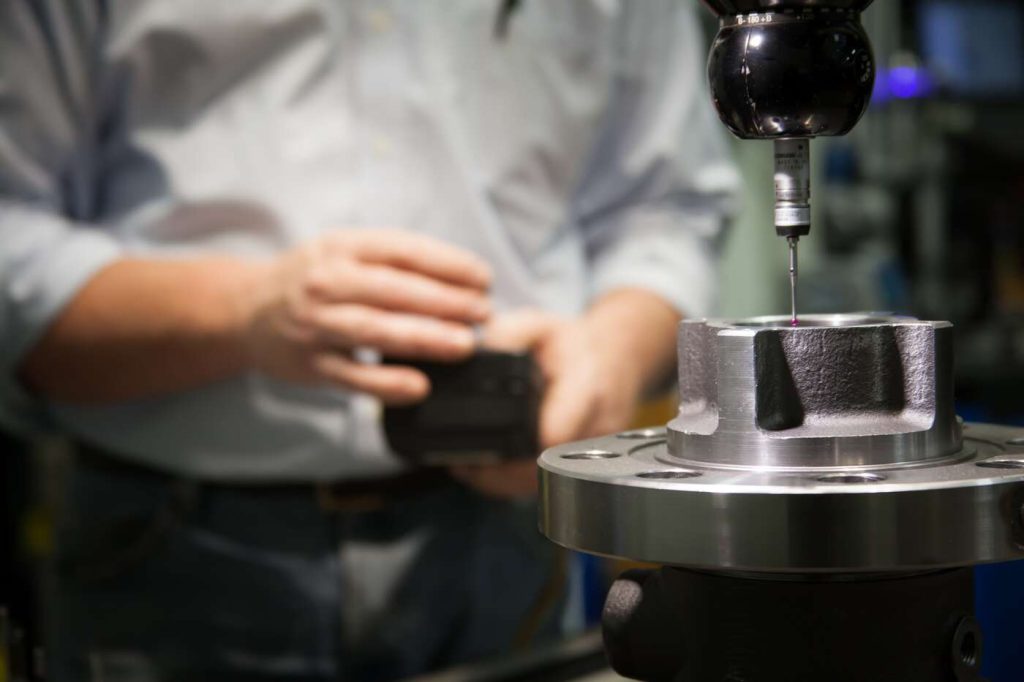
- CMMs and go/no-go gauges
- High-resolution 3D scanning
- Brinell hardness testing
- In-house X-ray and magnetic particle testing
- Serialized inspection data and PPAPs as needed
- Keyence WM-6000 3D laser scanner
- In-house X-ray, spectrometers, and hardness testers
Dimensional Tolerances
Each casting process has its own dimensional and material limitations. The Eagle Group’s capabilities span a wide range of part sizes and surface finishes. Here’s a general overview:
- Shell Molding: 2–400 lbs, ±0.030” per inch, 150–300 RMS
- Investment Casting: 1 oz–85 lbs, ±0.005” per inch, 125 RMS
- Airset Casting: 2-400 lbs, ±0.063” per inch, 350–560 RMS
- 3D Printed Molds: 2–400 lbs, ±0.063” per inch, 350–560 RMS
Reach out to our team for detailed project specs and downloadable tolerance charts.
Stainless Steel Casting FAQs
What is stainless steel casting?
Stainless steel casting is a process in which molten stainless steel alloy is poured into a prepared mold to create a part. The mold’s shape depends on the design specifications of the part, and is often formed by coating a pattern with a material that can resist the high temperatures of molten steel. After the molten alloy is poured into the mold cavity, it is allowed to cool and solidify into the final shape. The finished product is extracted and cleaned.
For more information on metalcasting processes, consult our “Introduction to Metalcasting” article.
Is stainless steel easy to cast?
Stainless steel is a versatile material in casting manufacturing, but it requires careful consideration. Stainless steel is a ferrous alloy, meaning it’s a metal whose composition contains mostly iron. Additional metals such as chromium, manganese, nickel, molybdenum, and vanadium strengthen its metallic bonds and raise its melting point. Higher chromium content, in particular, makes the alloy harder to melt and cast. Consequently, stainless steel can only be used with casting processes that can withstand high temperatures, like shell molding and investment casting. The mold design must also accommodate stainless steel’s expansion when heated to prevent surface irregularities or cracking. Ensuring a sufficiently high casting temperature for complete melting without damage is crucial, as is maintaining impurity-free melts to prevent defects like porosity.
What are the benefits of cast stainless steel?
Cast stainless steel is known for its strength and corrosion resistance. Compared to most grades of carbon steel and other comparable alloys, stainless steel grades are often more ductile and tougher, making them less likely to break during operation. At Eagle Alloy, we can cast stainless steel to produce custom, intricate shapes at high volumes, optimizing investment efficiency.
Other benefits to using the cast stainless steel process include:
- High heat resistance
- Excellent resistance to tarnishing, wear, and corrosion
- Exceptional durability
Ready to Start Your Next Project?
The Eagle Alloy team is standing by to help get your project started. Contact our team today to request a quote or speak with our engineering team. We’ll help you select the right process and deliver your project with quality and efficiency.